
Your customers expect more from their products. They want authenticity, transparency, and a direct connection to your brand story. That’s exactly what QR code clothing labels deliver.
By embedding scannable codes into woven labels, you transform a simple garment tag into an interactive touchpoint. Customers can verify authenticity, access care instructions, explore sustainability credentials, or register products—all with a quick scan from their phone.
This isn’t experimental technology anymore. Brands across fashion, outdoor gear, and premium apparel are using QR code clothing labels to reduce returns, fight counterfeits, and deepen customer relationships. The integration process is more straightforward than you might think, and the payoff shows up in both customer satisfaction and operational efficiency.
Why QR Code Clothing Labels Matter for Your Brand
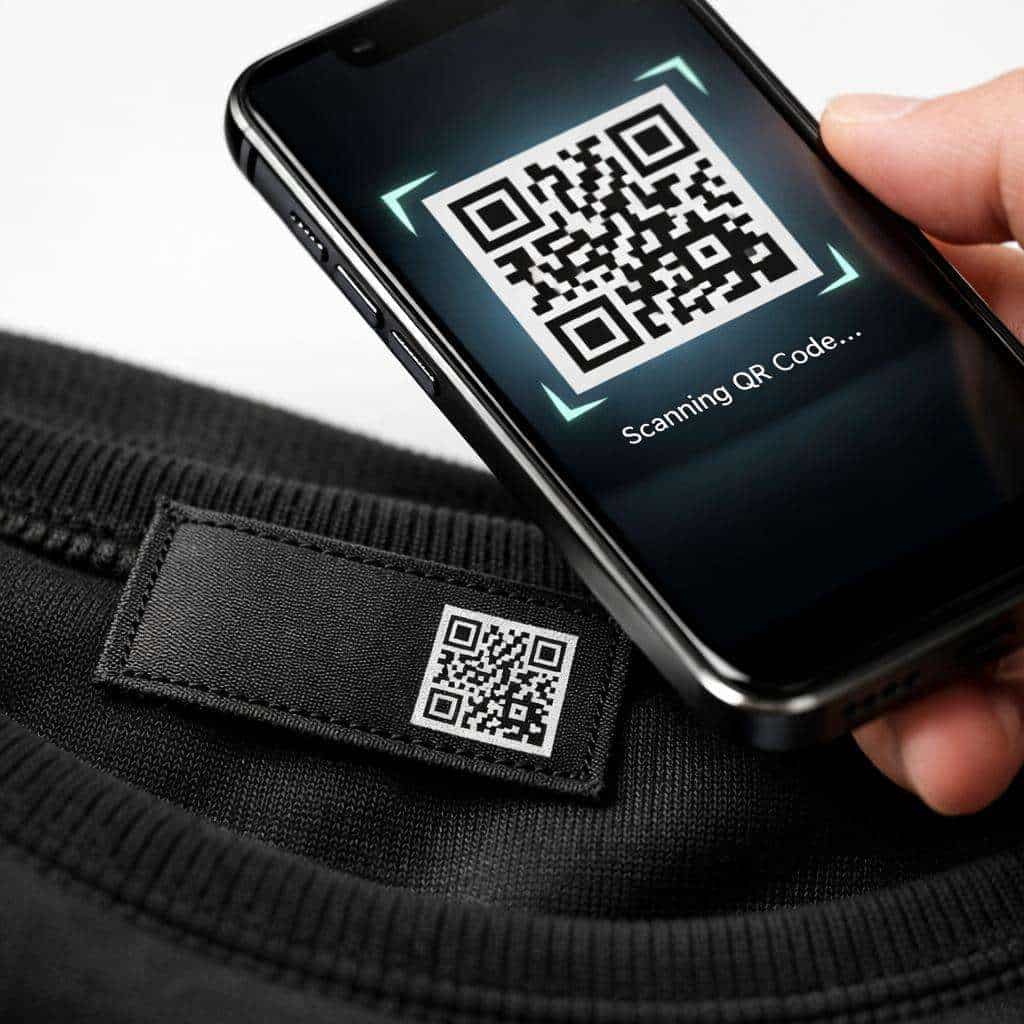
Traditional woven labels serve one purpose: they identify your brand. QR code clothing labels do that and open an entire communication channel between you and your customer.
When someone scans a QR code on your garment, you control where they land. You can direct them to product registration pages, detailed care videos, repair services, resale programs, or brand storytelling content. This creates value long after the purchase, building loyalty that static labels simply can’t match.
For tech-forward brands, this integration solves real problems.
Product returns often happen because customers don’t understand fabric care or sizing. A scannable label gives them instant access to size guides, washing instructions, and fit tips specific to that exact item. You’re removing friction at the moment it matters most.
Authentication is another critical benefit.
Counterfeiting costs the apparel industry billions annually, and premium brands take the biggest hit. QR codes with encrypted data let customers verify they’re holding a genuine product. This is simpler than it sounds—your label manufacturer can encode unique identifiers that link to your verification system.
Sustainability-conscious customers want proof, not promises.
QR code clothing labels give you space to share supply chain transparency, material sourcing, carbon footprint data, and end-of-life recycling options. You’re meeting customer expectations for accountability without cramming unreadable text onto a tiny label.
The operational benefits matter too.
You can update the content behind a QR code without reprinting labels. If you change your care instructions, add a new warranty program, or launch a resale marketplace, the same physical label adapts. This flexibility reduces waste and keeps your products current even after they’ve left the warehouse.
Smart labels also generate data.
When customers scan, you learn what information they’re seeking, which products generate the most engagement, and where gaps exist in your customer education. These insights help you refine product development and marketing strategies.
This technology integrates seamlessly with existing label production. You don’t need to overhaul your supply chain or invest in entirely new manufacturing processes.
How QR Code Integration Works with Woven Labels
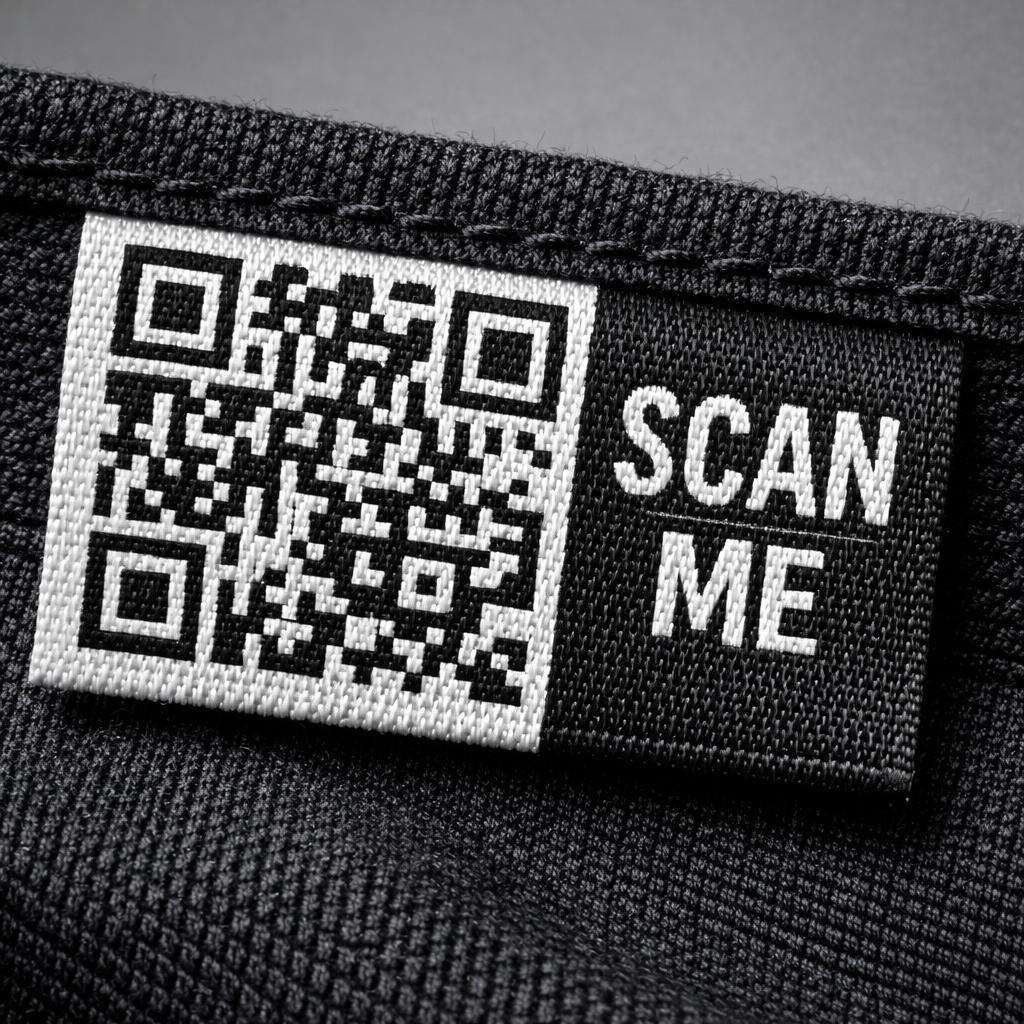
Integrating QR codes into woven labels involves three main decisions: code generation, weaving technique, and destination content. Each step offers flexibility based on your brand needs and budget.
Code generation starts with choosing between static and dynamic QR codes. Static codes point to a fixed URL that never changes. They’re simple and cost-effective, ideal if you’re directing all customers to the same general brand page or care guide. Dynamic codes let you change the destination URL without changing the physical code. They also enable tracking and analytics. Most brands choose dynamic codes for the flexibility they provide.
You’ll work with your label manufacturer to determine the optimal code size and positioning. QR codes need adequate contrast and sizing to scan reliably. On woven labels, this typically means a minimum size of 15mm x 15mm, though 20mm x 20mm offers better scan performance across different phone cameras and lighting conditions. Your manufacturer can advise on size based on your label dimensions.
The weaving technique affects both aesthetics and functionality. Damask weaving creates the cleanest QR codes with sharp contrast between light and dark modules. This produces the most reliable scans and works well for brands prioritizing functionality. Jacquard weaving offers more color options and complex designs if you want the QR code integrated into a more elaborate label aesthetic.
Your label can feature the QR code as the primary design element or incorporate it subtly alongside your logo and care symbols. Both approaches work—it depends on how prominently you want to feature the interactive element.
The destination content requires the most strategic thinking.
Where do you want customers to land when they scan? Popular options include product registration portals, authentication verification pages, detailed care and styling guides, brand story and sustainability reports, warranty registration, and resale or recycling program information.
You can create a simple landing page on your existing website or use dedicated product experience platforms designed for smart labels. The key is ensuring the mobile experience is clean, fast, and genuinely useful. A slow-loading or irrelevant page trains customers not to scan your labels.
Testing is critical before full production. Request sample labels and test scanning under different conditions—bright sunlight, dim lighting, various phone models, different angles. This catches potential issues before you’ve manufactured thousands of labels. Most problems at this stage relate to size or contrast and are easy to fix.
Real-World Example: Outdoor Apparel Brand Implementation
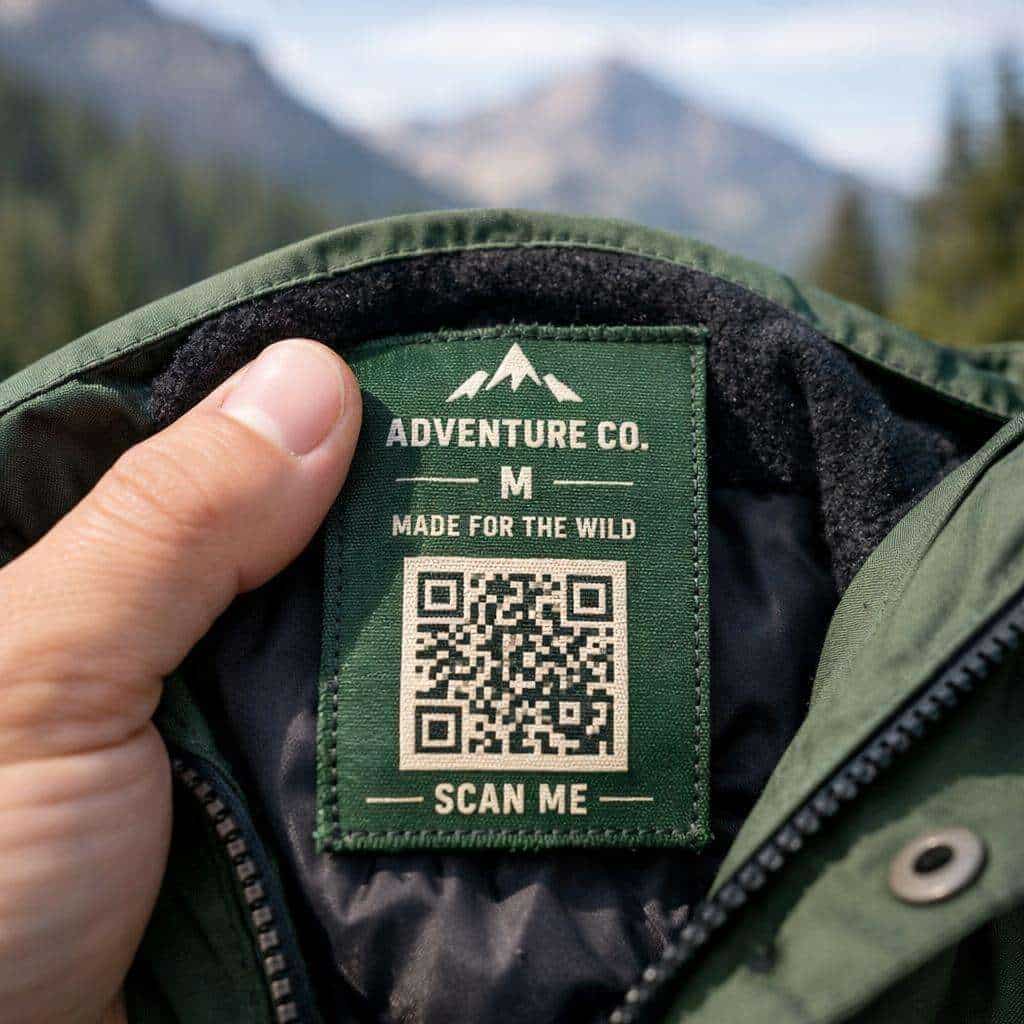
A mid-sized outdoor apparel brand was experiencing a 22% return rate on their technical jackets, primarily due to care-related damage and sizing confusion. Customers were machine-washing items that required specialized care, and the printed care labels were too small to include adequate instructions.
They integrated QR code clothing labels into their woven neck tags, maintaining their existing brand aesthetic while adding a small scannable code in the corner. The code directed customers to a mobile-optimized page with product-specific information: fabric technology explanations, video washing demonstrations, repair service options, and a direct link to customer service for fit questions.
Within six months, their return rate dropped to 14%. Customer service inquiries about care instructions decreased by 31%, freeing up their team to handle more complex issues. The brand also added a product registration incentive—customers who scanned and registered received early access to new releases.
The data from scans revealed that customers were most interested in repair services and waterproofing renewal. This insight led the brand to expand their repair program and create video content about maintaining garment performance over time. Engagement with these resources correlated with higher repeat purchase rates.
The implementation cost was minimal. Their existing label manufacturer added QR code capability for a small per-unit increase, and they built the landing pages using their current website platform. The return reduction alone justified the investment within the first quarter.
What To Do Next
Adding QR code clothing labels to your products starts with a conversation with your label manufacturer. Most established woven label suppliers now offer QR code integration and can walk you through sizing, weaving options, and minimum order quantities.
Before that conversation, decide what value you want to deliver when customers scan. Map out the customer journey from scan to landing page, and ensure you have the content ready or a plan to create it.
The technology is proven, the costs are reasonable, and your customers are already comfortable scanning codes in dozens of other contexts. This is a practical way to differentiate your brand and solve real customer problems.
Request a quote from your favorite label supplier today and ask specifically about their QR code integration options.